时间的呼吸 / The Breath of Time
纳博维亚古罗马历史国家博物馆艺术特展 / An Artistic Dialogue with
Narbo Via
19 May 2026 — 3 January 2027 | Narbo Via Museum, Narbonne, France
NARBO VIA
纳博维亚古罗马历史国家博物馆于开馆五周年之际,邀请国际艺术家蒋琼耳,开启一场史无前例的宏伟文明对话。在博物馆馆藏的核心语境中,蒋琼耳构想了一场前所未有的对话——其当代艺术作品与古罗马文明相遇,在形式、材质、象征意涵与时间层叠之间,推动考古文明与当代创作的深度对话,并以此为契机,跨越疆界,连接多元文化与人类文明。
展览《时间的呼吸》不仅为馆藏文物注入了全新视角,更生动地诠释了博物馆在文化传承与创新上的宏伟抱负。在这一独特的历史场域中,艺术不再只是展示,而更成为一种以当代回应文明的方式——在时间的沉积之中,重新开启不同文明之间的对话,并指向一个始终被探寻的共同命题:我们在一起吗?我们如何在一起?
To celebrate its 5th anniversary, Narbo Via invites
Franco-Chinese artist Jiang Qiong Er to enter into dialogue
with its collections. At the heart of the Museum's
collections, Jiang Qiong Er has conceived an unprecedented
encounter between her works and Roman civilisation,
exploring resonances between forms, materials, symbols and
layers of time.
This exhibition continues her recent artistic journey
showcased at the Musée Guimet in France, UNESCO, and
Waddington Custot Gallery in the UK. Taking time as its
narrative language and shared human spiritual values as its
coordinate, it presents her latest artistic creations. The
exhibition The Breath of Time offers a renewed perspective
on the collections while fully embodying the museum's
cultural vision. In this unique historical context, art
becomes a way of responding to civilisation through the
contemporary.
十二呼唤 / XII Calls — 一场深邃的文明之思
在此次与 Narbo Via
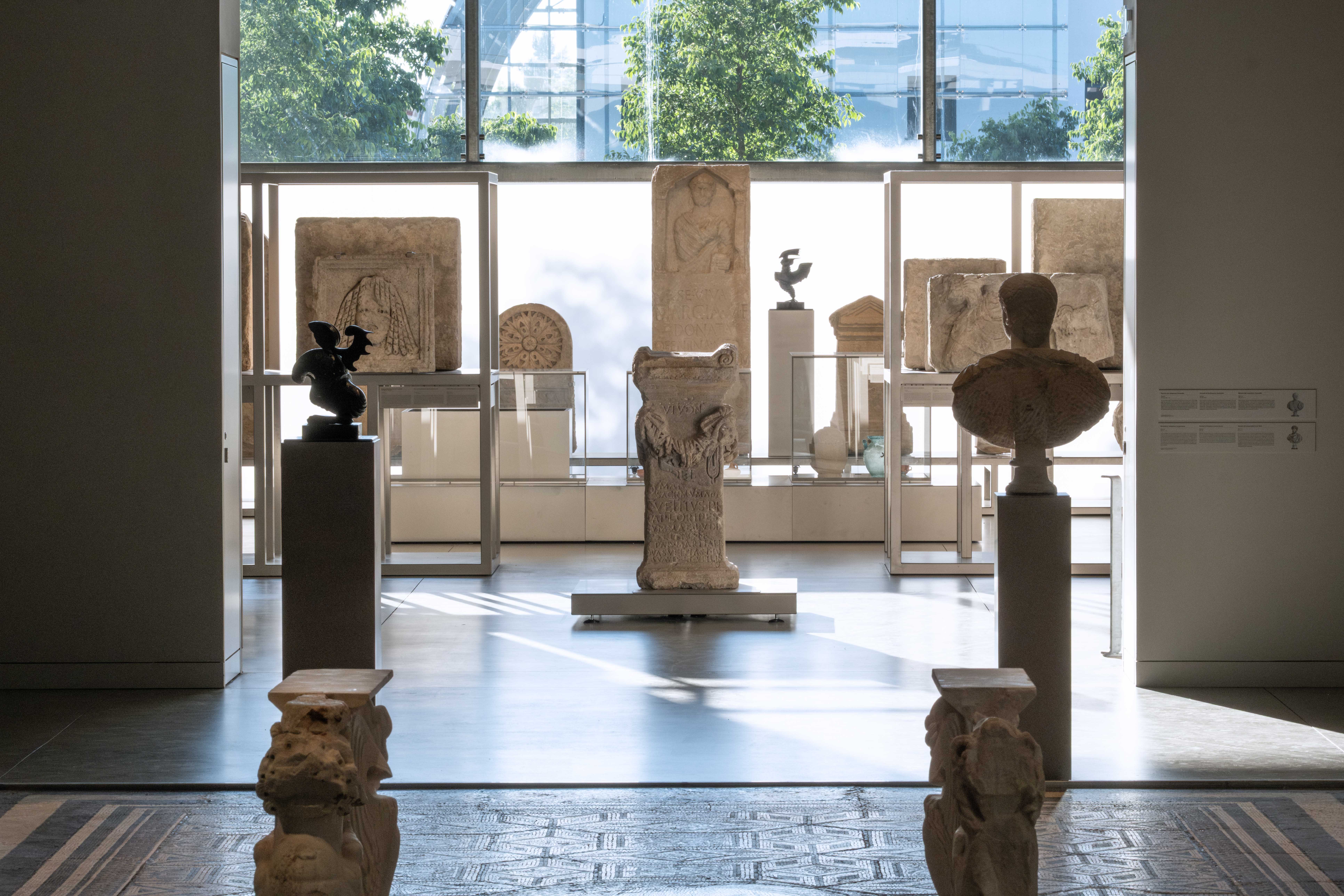
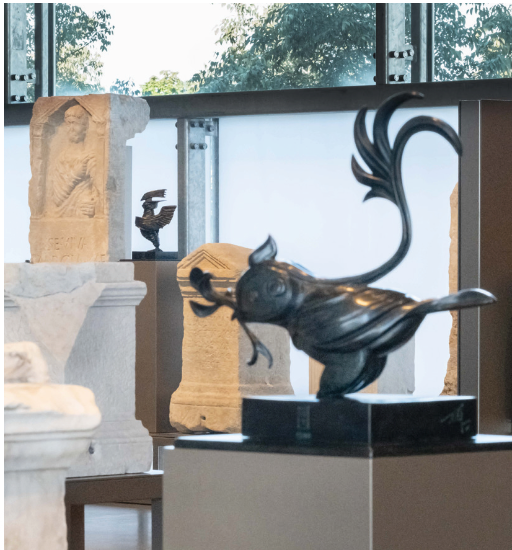
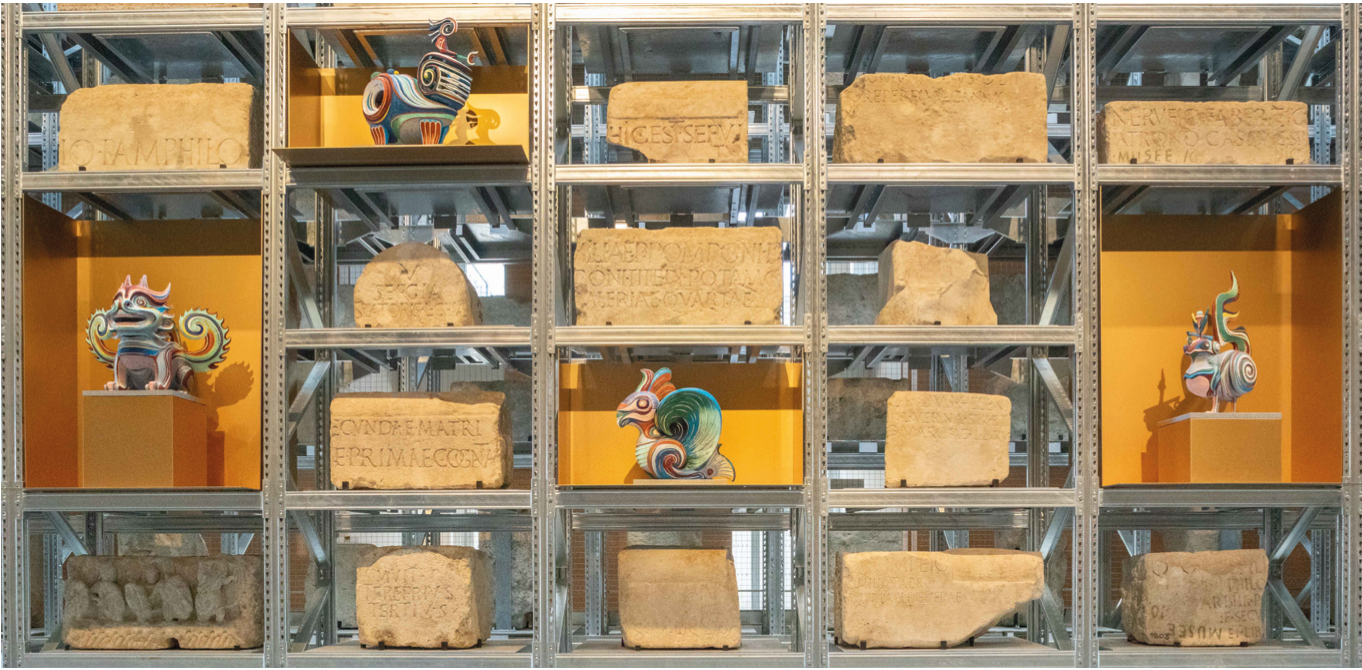
古罗马历史国家博物馆文物馆藏的跨时空对话中,艺术家蒋琼耳于常设展厅的核心地带,呈献了十二尊岩彩神兽雕塑,由此叩问她孜孜以求的问题:"我们在一起吗?我们如何在一起?"这些充满奇幻色彩的生命体提出了这一当下最为紧迫的命题。
神兽是由各大古老文明的瑰丽想象交织而成的"混血儿"。这些象征性的存在,其灵感不仅源自悠久的中国神话,亦广泛汲取了玛雅文明、古埃及与古印度等根源文明的精髓,旨在传递勇气、智慧、博爱与善良等普世价值。它们静谧地伫立于展线之中,与古罗马神话遥相呼应,在不同文明间建立起微妙的情感联结,进行一场深邃的文明之思,由此探讨了人类文明的核心命题:个体在宇宙中的归宿、人与万物生灵的羁绊,以及那道横亘于可见与不可见世界之间的永恒边界。
与古罗马文明的对话 / XII Calls — An Artistic Dialogue with
Narbo Via
For this unique encounter with the ancient collections of
Narbo Via, Jiang Qiong Er presents twelve mythical creatures
throughout the permanent exhibition — hybrid figures shaped
by the imagination of great ancient civilisations, asking
the pressing question of our time: "Are we together? How can
we be together?"
Inspired by Chinese mythology as well as other foundational
cultures — Mayan, Egyptian and Indian — these symbolic
entities embody universal values such as bravery, wisdom,
solidarity and benevolence. Integrated into the museum
route, they resonate with Roman mythology, creating subtle
correspondences between ancient civilisations while raising
essential questions about humanity's place within the
cosmos.
The exhibition presents multiple series, including the XII
Calls wax painting series, the Her Voice series, and the
Whispering Clouds series.

《十二呼唤》青铜雕塑与《洞穴天使》布面矿石岩彩 / Painting, Angels of
the Caves and Time, one of the XII Calls in bronze | ©Qiting Lin

《十二呼唤》岩彩雕塑|"共融" / Inclusion, one of the XII Calls,
rendered in mineral pigments

《十二呼唤》岩彩雕塑|"本真" / Authenticity, one of the XII
Calls
新材料与媒介的游戏 / A Play of Materials Between Past and
Present
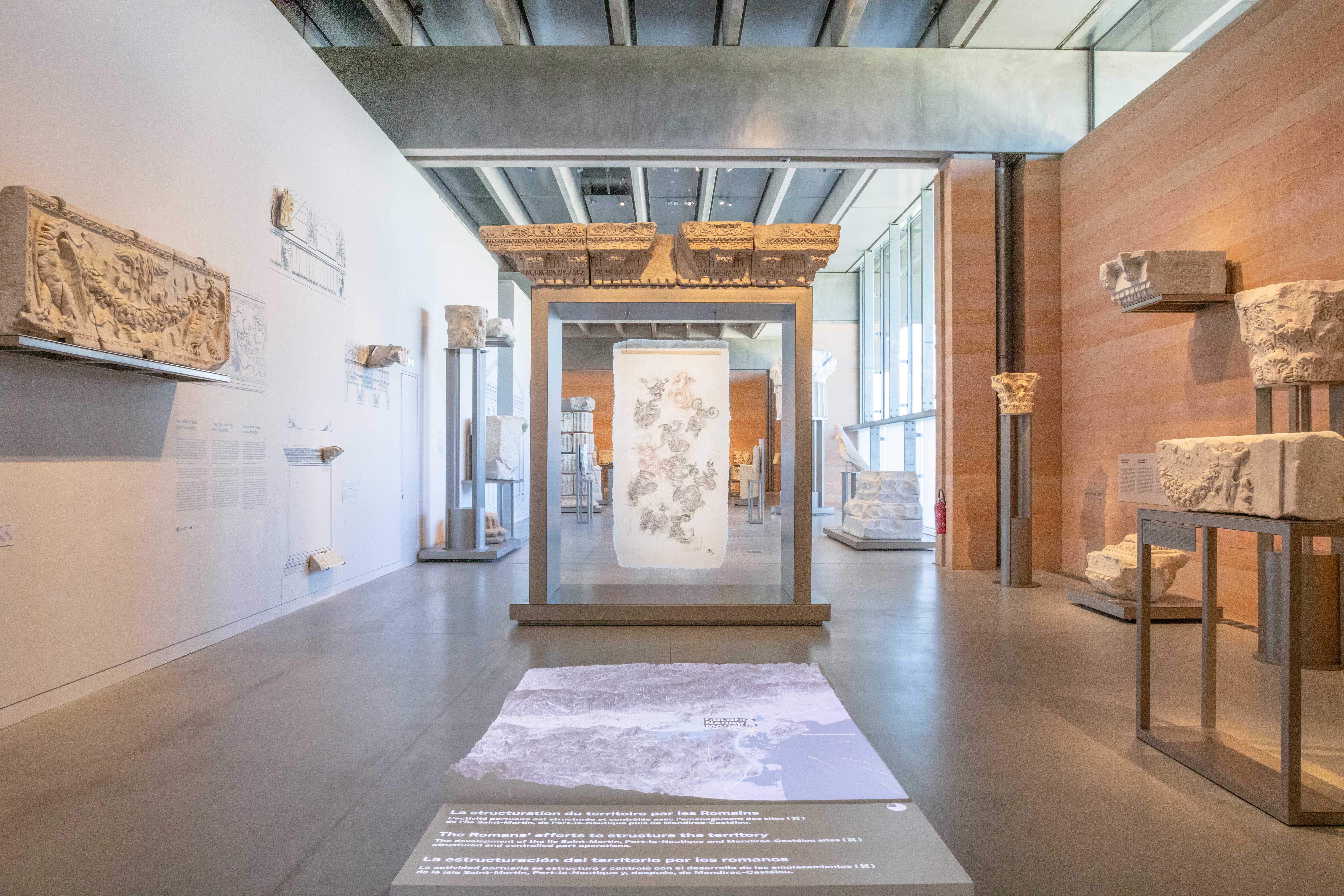
展览《时间的呼吸》不仅是蒋琼耳艺术探索的延续,更开辟了新的图景:与纳博讷(Narbonne)古代文化遗产的深度对话。艺术家以一种审慎而细腻的视角介入常设展厅,将创作重心聚焦于象征性的符号、承载记忆的媒介,以及时间的层叠。
部分作品采用了令人联想起岩画的天然矿物颜料,与馆内珍藏的古代壁画形成了跨越千年的回响;另一些作品则创作于薄薄的蜡片之上,通过半透明的质感、自然的裂纹与重叠的层次,营造出过去与现在交汇的鲜活画面。这种对时间的视觉呈现,与
Narbo Via
古罗马历史国家博物馆内的考古文物构成了紧密的共鸣。这些带有风化痕迹、岁月沉积与残缺叙事的古物,与艺术新作共同编织出一场关于时间的生命对话。
本次展览中,蒋琼耳最新创作的作品《世界之路》(Via
Mundus)是被此次与古罗马文明对话而激发的全新创作,并发展了她的"时间拓片术",以当代人的勇气和决心融合时间与文明的残片,在时间的呼吸中形成面向未来的新时序。
Some works are created using pigments reminiscent of
prehistoric cave paintings, echoing the ancient frescoes
preserved within the museum. Others, created on delicate wax
surfaces, explore transparency, cracking and layering,
producing vibrant textures where past and present converge.
This representation of time enters into close dialogue with
the archaeological artefacts of Narbo Via.
The new work Via Mundus, inspired by this dialogue with
Roman civilisation, develops the artist's "time rubbing
technique," fusing fragments of time and civilisation with
contemporary courage to form a new temporality oriented
toward the future within the breath of time.

《洞穴天使》布面矿石岩彩画|天 / Angels of the Caves, The Sky

《洞穴天使》布面矿石岩彩画|天、地 / Angels of the Caves, The
Sky and The Earth | ©Qiting Lin

艺术家蒋琼耳童年 / Jiang Qiong Er as a child
书写、记忆与隐匿之声 / Writings, Memories and Invisible
Voices
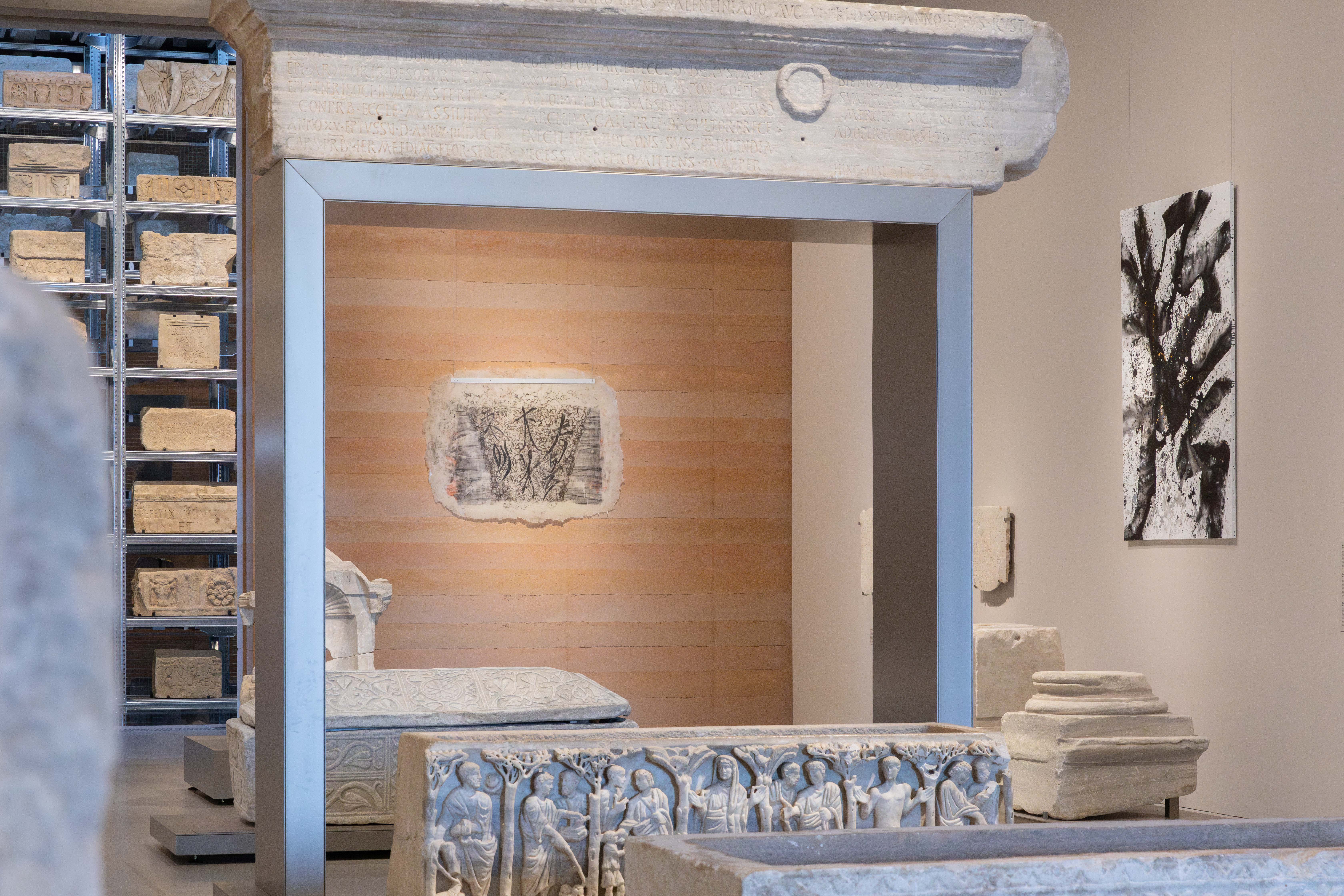
蒋琼耳围绕"女书"展开的创作,是其对"被掩埋的记忆"这一课题的深度延伸。女书起源于湖南江永地区,曾由当地绣女独创并使用。这一如今几近失传的文字系统,是一段长期处于边缘地位的女性心声的独特见证。"新女书"既是对这一传统的延续,亦是一种坚定的突破。作为蒋琼耳创立的当代书写形式,它被定义为
21
世纪女性表达的载体。植根于传统女书,这一新语言源于艺术家的一个敏锐观察:古老的女书虽然动人且珍贵,却已无法完全承载当代女性的身影、气度与力量。以此记忆为种,艺术家创造了一种前所未见的视觉语言:她汲取了篆书坚韧的风骨、草书灵动的自由,以及甲骨文那近乎神圣的原始质朴。在现代科技的辅助下,这四种笔墨能量交织碰撞,孕育出一种既深扎传统、又全然现代的新书法形态。
通过将其置于 Narbo Via
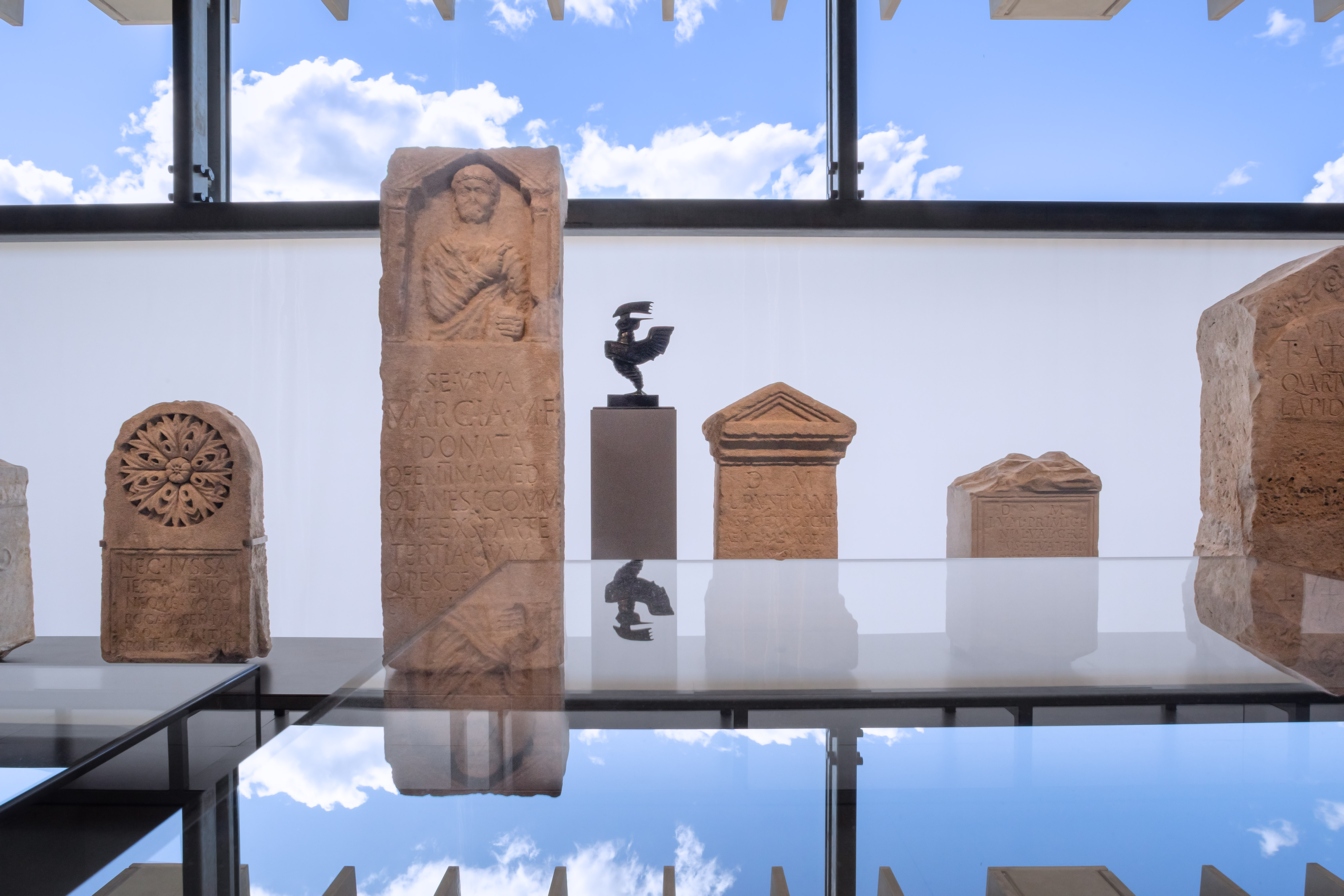
古罗马历史国家博物馆的常设展线中,新女书与馆藏的古罗马拉丁铭文展开了一场微妙的对话,引导观众去思考:何者得以流传?何者终将消逝?艺术又如何让被遗忘者重见天日?这种互文关系亦是对女性地位与教育权的回响——无论是在古罗马还是中国历史上,女性接触阅读与书写的权利都曾长期受限。这种两种文字、两大文明、两段记忆的交汇,构成了一次诗意的沉思:艺术如何启迪并重塑我们的文化遗产。
Jiang Qiong Er's work around nüshu writing extends a
reflection on hidden memories. Developed and used
exclusively by women embroiderers from the Jiangyong region
in Hunan, this now-vanished script constitutes a unique
testimony to a female voice long kept at the margins. New
Nüshu continues this legacy, the artist inventing an
original visual language by combining seal script, cursive
script, and oracle bone inscriptions.
By integrating this work into Narbo Via's permanent
exhibition route, the artist creates a subtle dialogue with
ancient Latin inscriptions, inviting reflection on what is
transmitted, what disappears, and what art can render
visible once again. This juxtaposition echoes the
historically limited access to reading and writing for
women, both in Roman antiquity and throughout Chinese
history. This unprecedented encounter between two writing
systems offers a poetic reflection on the ways art reveals
and reinvents cultural heritage.

《新女书-勇敢》布面画|"勇敢" / Painting on canvas — Her Voice,
Bravery
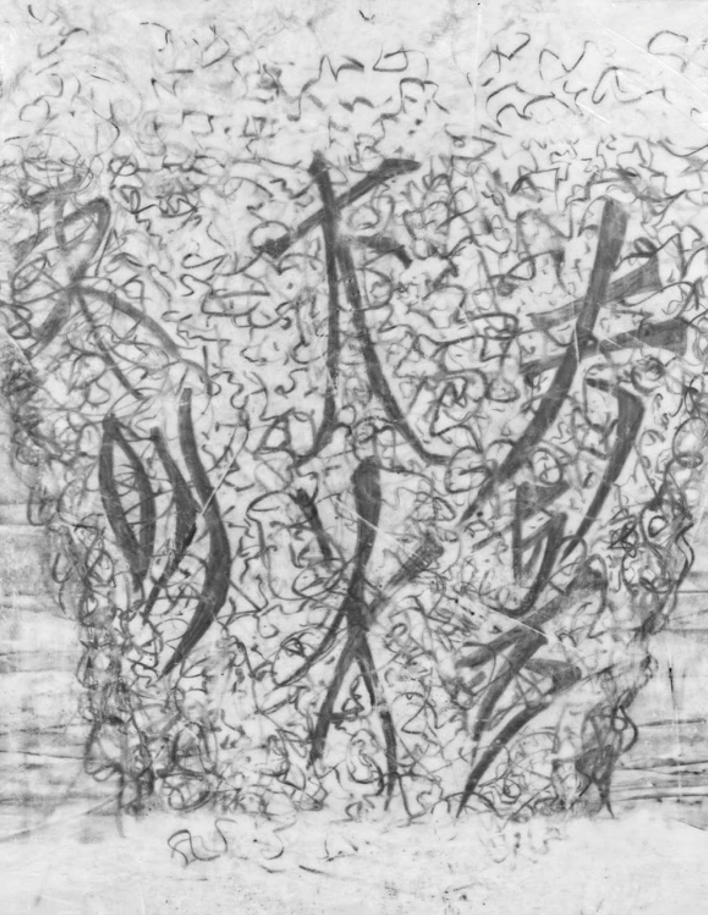
《新女书-勇敢》蜡画|"光明 神奇物质" / Paintings — Her Voice,
Bravery

《新女书-勇敢》系列作品 / Paintings — Her Voice, Bravery |
©Qiting Lin
一位在人类文明之间行走的国际艺术家 / An Internationally
Acclaimed Artist
蒋琼耳是同时在艺术、设计与文化思想领域建立国际影响力的艺术家。她以跨文明、跨媒介、跨学科的创作实践,构建出一种兼具东方精神与世界视野的当代艺术语言。其作品游走于绘画、雕塑、装置、影像与公共艺术之间,以对材料、时间与文化记忆的深刻感知,展开关于人类文明及精神世界的持续探索。
出生于中国艺术世家,蒋琼耳自幼浸润于深厚的东方文化传统之中。其外祖父蒋玄佁,是中国最早留学海外的艺术家之一,也是最早将西方油画体系引入中国的重要先驱;父亲邢同和则是中国著名建筑师,上海博物馆的设计者。她两岁习画,六岁正式师从国画大师程十发与书法大家韩天衡,在中国传统书写与文人美学的精神脉络中奠定根基。其后毕业于同济大学艺术设计专业,并赴法国国立高等装饰艺术学院深造家具与室内设计,由此开启了一条贯通东西方文化的创作道路。长期旅居欧洲的经历,使蒋琼耳形成了一种开放而自由的"双重文化视角"。她既深植于中国传统哲学与美学之中,又以国际化的语言回应当代世界的精神议题。对她而言,艺术不只是形式的表达,而成为一种连接世界、召唤和平与共同呼吸的语言。她擅长驾驭多种媒介与材料,将传统工艺、自然物质与当代科技交织融合:从矿物岩彩、青铜、竹丝镶嵌、蜡画,到人工智能生成书写系统、沉浸式影像与大型公共装置,她始终在探索材料背后的时间性与文明记忆。她提出"文字是一种生命的气息",并通过其持续发展的"新女书"系列、"十二呼唤"系列、"世界之路"系列等作品,将古老文明中的精神遗产转化为一种面向未来的人类共同语言。
蒋琼耳的艺术实践,不仅关乎形式创造,更是一种关于"我们如何在一起"的文明思考。她实践着"共世艺术(Universal
Art)",试图在分裂与加速的时代中,通过艺术重新建立人与历史、人与自然、人与他者之间的联结,以当代方式重新唤醒人类共同的精神原型与情感记忆。2009
年,她与 Hermès 共同创立上下 Shang
Xia,她以"当代中国生活美学"为核心理念,将中国传统工艺带入国际视野,重新定义了
21
世纪东方美学在全球语境中的位置。其作品被世界多家重要机构永久收藏,包括
The British Museum、Victoria and Albert Museum、Musée
Guimet、Musée des Arts Décoratifs
等。她曾获"法国文学艺术骑士勋章"、"法国国家功勋骑士勋章"以及"意大利团结之星骑士勋章"等多项国际荣誉,并入选《福布斯》全球最具影响力华人榜单。2025
年,其作品《十二呼唤》被 UNESCO
永久收藏,成为其"共世艺术"理念的重要象征。如今,蒋琼耳持续以"时间"为线索,在历史与未来之间展开创作。
"时间的呼吸"不是对历史的回望,而是在时间之中,重新建立一种理解彼此、与万物共生的秩序,一种属于当代文明的对话方式。——蒋琼耳
A Franco-Chinese artist and designer, Jiang Qiong Er was
born in Shanghai and trained at Tongji University and the
École nationale supérieure des Arts Décoratifs in Paris. In
2009, she co-founded Shang Xia with Hermès, dedicated to
promoting traditional Chinese craftsmanship. Her work
reflects a profound engagement with ancient civilisations,
foundational narratives and the ways in which inherited
forms can be reactivated through a contemporary visual
language.
Her works are held in the collections of the British Museum,
the Victoria and Albert Museum, UNESCO, and the Musée des
Arts Décoratifs in Paris. She has been invited by major
museum institutions, including the Musée national des arts
asiatiques Guimet in Paris (2024-2025).
"The Breath of Time is not a look back at history, but a way
to re-establish an order of understanding each other and
coexisting with all things — a mode of dialogue that belongs
to contemporary civilisation." — Jiang Qiong Er

蒋琼耳肖像 / Portraits of Jiang Qiong Er | ©Qiting Lin

蒋琼耳肖像 / Jiang Qiong Er
纳博维亚古罗马历史国家博物馆 / The Narbo Via Museum
Narbo Via 古罗马历史国家博物馆于 2021 年 5
月正式落成开放,现已成为深度探索古罗马文明及考古研究前沿的必由之地。博物馆旨在致敬纳博讷高卢行省的首府——纳博马修斯(Narbo
Martius)。该城始建于公元前 118
年,是古罗马设立的第一座高卢殖民地,其深厚的古代文化遗产在国际考古界具有举足轻重的标杆意义。
博物馆由享誉全球的诺曼·福斯特 Foster + Partners
建筑事务所操刀设计,并由展陈设计师 Adrien Gardère 与建筑师
Jean Capia
协同完成。博物馆矗立于罗宾运河畔,是纳博讷(Narbonne)城市入口处一座引人注目的建筑地标。博物馆建于基座之上,简洁的水平线条与地中海风光及其收藏的古老遗产相得益彰。
超过 2600 平方米的展陈空间内,呈现了 1300
余件珍贵藏品。其中最引人注目的是由 760
块葬制建筑残片构成的巨型可调节石墙——这一设计不仅规模宏大,更是全球唯一的艺术创举。作为一座充满活力的文化综合体,博物馆还配备拥有
192
个座位的多功能厅、文创商店、特色餐厅、教育工作坊、研究空间以及可举办户外表演的景观花园。自
2020 年 2 月 1
日起,纳博维亚古罗马历史国家博物馆由法国国家政府、奥克西塔尼大区、大纳博讷城市群及纳博讷市等多方共同组成的"文化合作公共机构"(EPCC)联合管理。目前,奥克西塔尼大区主席卡罗尔·德尔加(Carole
Delga)担任机构董事会主席。除纳博维亚古罗马历史国家博物馆外,该机构还统一管辖位于奥德省萨莱勒市(Sallèles-d'Aude)的
Amphoralis 古陶工作坊遗址以及纳博讷市内的 Horreum
地下谷仓遗址。
Opened in May 2021, the Narbo Via Museum pays tribute to
Narbo Martius, capital of the Roman province of Narbonensis
and the first Roman colony founded in Gaul in 118 BC.
Designed by Foster + Partners in collaboration with
scenographer Adrien Gardère and architect Jean Capia, the
museum stands as a striking architectural landmark on the
banks of the Canal de la Robine.
The permanent galleries extend across more than 2,600 sqm
and present over 1,300 works, including 760 fragments of
funerary monuments displayed within a vast modular wall
unique in the world. A true living cultural space, Narbo Via
also features a 192-seat auditorium, bookshop, restaurant
Cadence au Musée, educational workshops, research spaces and
gardens.
Since 1 February 2020, Narbo Via has been managed through a
partnership governance model within a Public Cultural
Cooperation Establishment (EPCC).

纳博维亚古罗马历史国家博物馆 / Narbo Via Museum

Narbo Via Museum | ©Foster Nigel Young

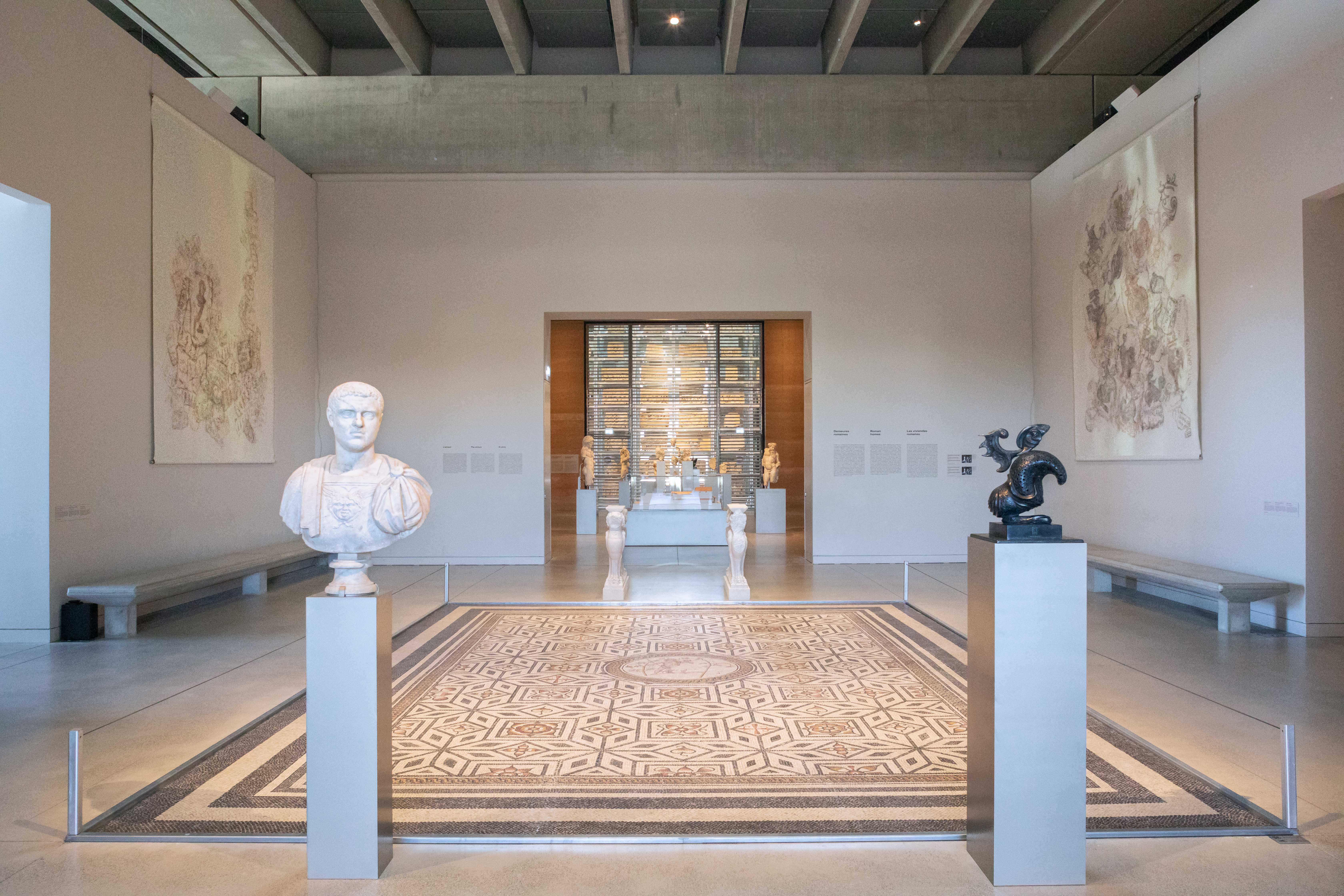
Lapidary Gallery — Narbo Via Museum | ©Arnaud Späni

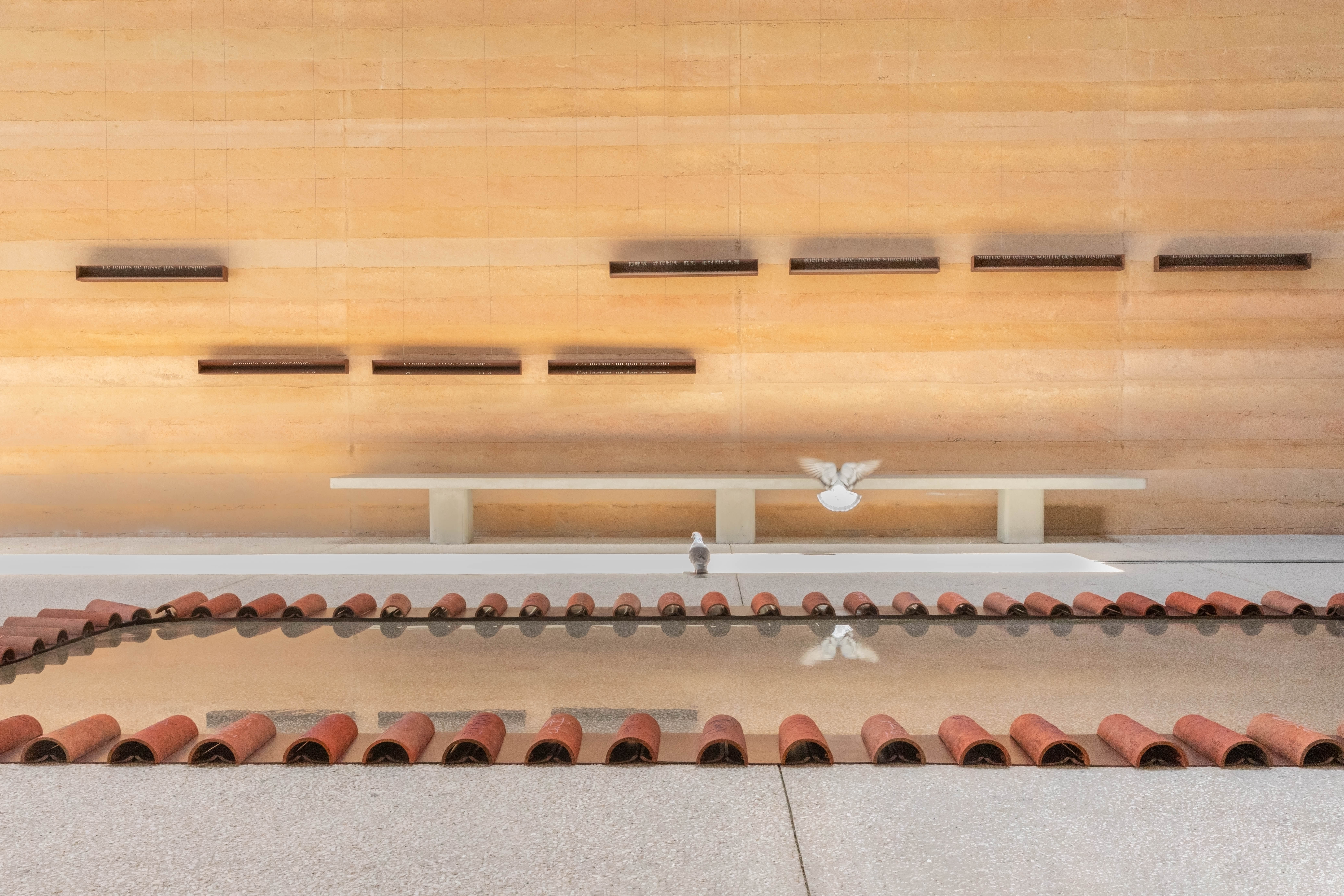
Lapidary Gallery with the XII Calls — Narbo Via Museum | ©Qiting Lin
五周年庆典:一场非凡的周年纪念活动 / 5th Anniversary
Programme
2026 年,Narbo Via
古罗马历史国家博物馆迎来开馆五周年。此次周年庆不仅彰显了博物馆在奥克西塔尼大区文化版图中的重要地位,也再次确认了其作为古罗马文明研究与传播重要机构的角色。开馆五年以来,博物馆已成为重要的文化目的地,累计接待观众超过
62
万人次。为庆祝这一时刻,纳博维亚将推出一系列精彩纷呈的周年活动,融合展览、演出、公众参与式创作以及节庆活动。该项目面向所有公众,邀请观众以全新、沉浸式且更具可达性的方式体验博物馆。
In 2026, the Narbo Via Museum celebrates five years since
opening. Five years after its inauguration, the museum has
established itself as a major cultural destination, having
welcomed more than 620,000 visitors. To mark the occasion,
Narbo Via is presenting an exceptional anniversary programme
combining exhibitions, performances, participatory creations
and festive events.

Sky & Earth | ©QEJ Studio
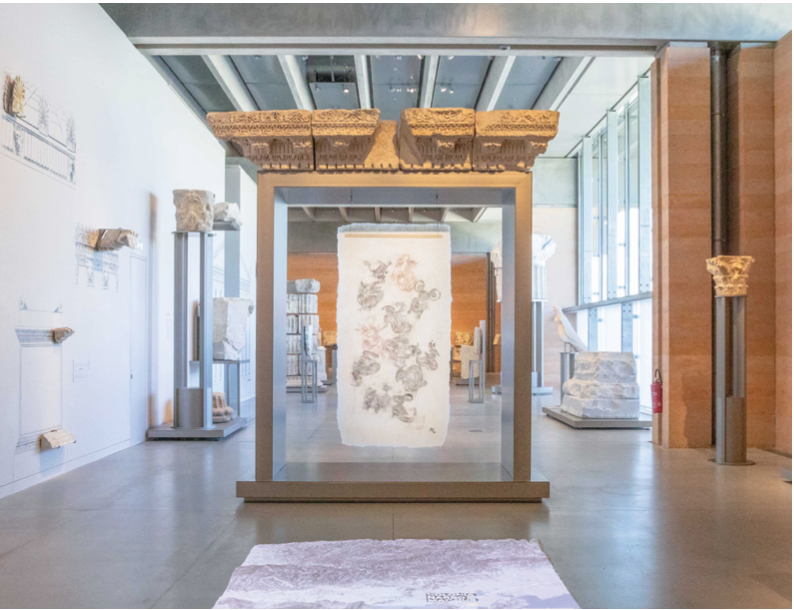
XII Calls | ©QEJ Studio

Sky & Earth and The Reflections | ©QEJ Studio
XII Calls | ©QEJ Studio
©QEJ Studio
时间的呼吸 / The Breath of Time | 19 May 2026 — 3 January 2027
Narbo Via Museum | 2 avenue André Mècle, 11100 Narbonne, France
Tuesday to Sunday, 10 am – 6 pm | Tel: +33 (0)4 68 90 28 90